
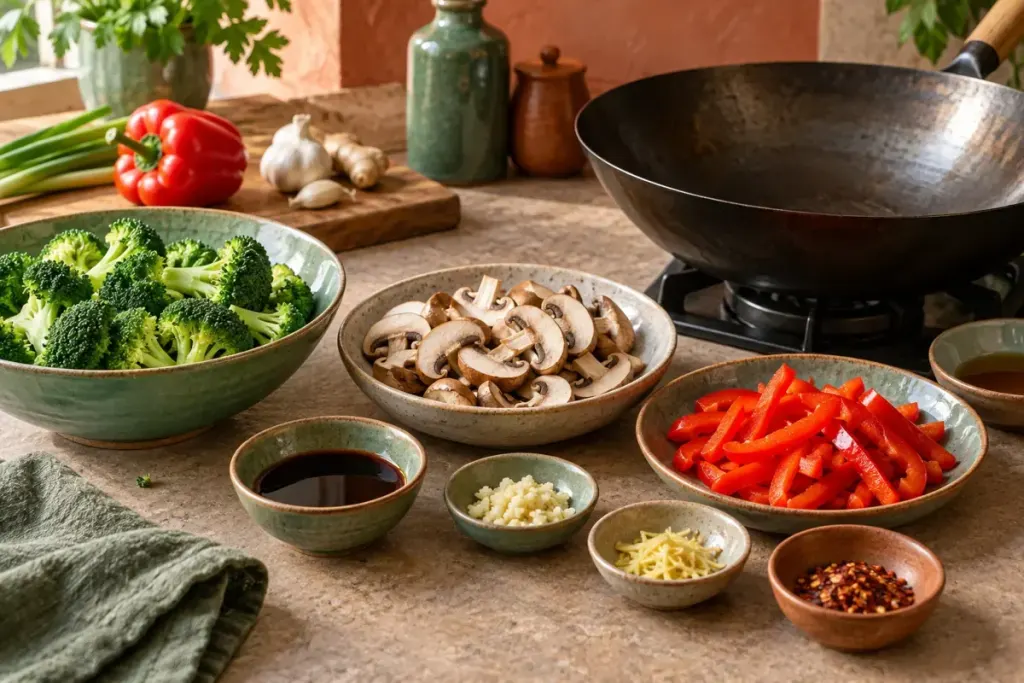
The crowded pan is often the last symptom of a preparation problem. Carrots still need slicing, garlic is already colouring, and wet mushrooms are waiting in the colander. Putting everything within reach before cooking gives each ingredient a better chance.
This guide is a preparation workflow, not a replacement for a tested recipe. The Woks of Life’s everyday vegetable stir-fry offers a complete recipe and a useful example of cooking vegetables in an order that suits them. Follow its quantities and method if you want a finished dish to reproduce.
Sort by behaviour, not by colour
On your board, create three small groups: firm vegetables that need more cooking, quicker-cooking pieces, and delicate leaves or finishing ingredients. Size matters as much as the name of the vegetable. Thick carrot chunks will behave differently from fine slices.
For a practice meal, choose a short ingredient list. Broccoli, mushrooms and a little pepper give you enough variation to learn from without managing half the vegetable drawer. Keep the cuts reasonably consistent within each ingredient.
Set out a cooking lane
Arrange the prepared ingredients in the order your recipe uses them. Put measured sauce beside the cooker, with a clean spoon and a serving plate. Dry washed vegetables appropriately before they meet hot oil, and keep water away from the oil itself. Set ventilation running and use cookware suited to your hob.
If the recipe uses a starch slurry, keep it in its own small bowl until directed. That makes it easier to stir again and control the addition. See our slurry guide for the final thickening stage.
Give the pan a realistic job
A household hob and a restaurant burner do not behave identically. Do not fill the pan merely because the ingredients fit in it. If the chosen recipe serves more people than your cookware can handle, plan separate batches and follow the recipe’s guidance for combining them.
Before turning on the heat, check the handle position and remove clutter around the hob. Speed should come from preparation, not from reaching over hot cookware to find the next ingredient.
Review the meal with one useful question
Which ingredient was ready too early or too late? Write that down alongside its cut size. Next time, change that ingredient’s preparation or timing while keeping the rest consistent. A short note—“pepper pieces much smaller than broccoli”—is enough.
Serve promptly as your recipe directs. You do not need a collection of specialist sauces to practise this skill; you need an orderly board, a suitable recipe and attention to what is happening in the pan.