
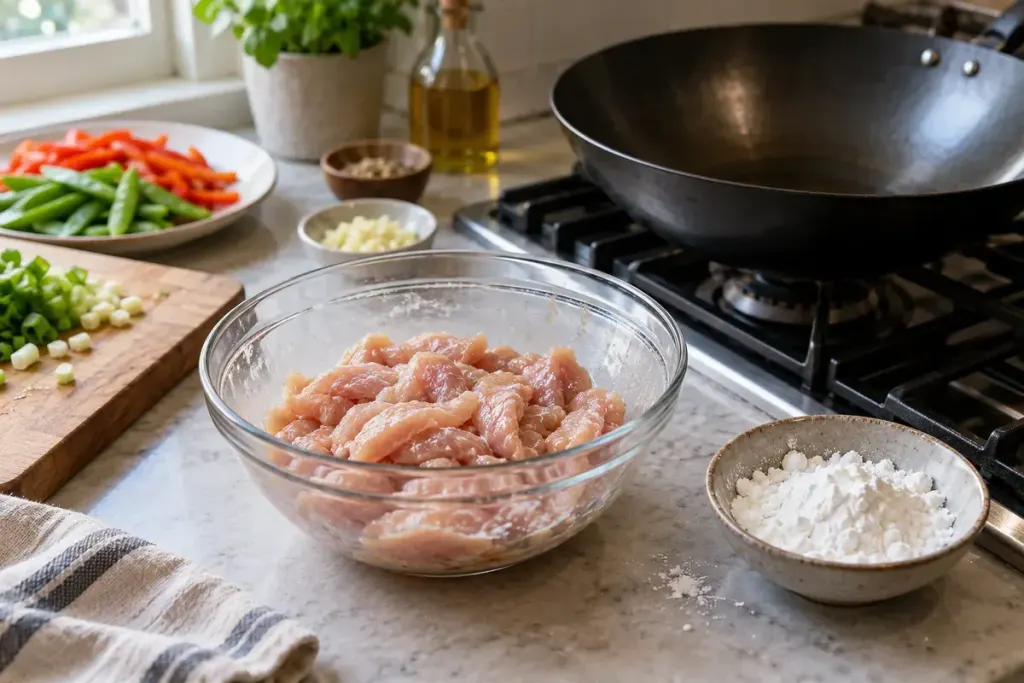
The tender chicken in a stir-fry usually does not wear a visible, crunchy jacket. Velveting works towards a different result: a light coating and a planned cooking sequence that help the pieces stay pleasant to eat when they meet vegetables and sauce.
The Woks of Life’s chicken-velveting guide describes preparing sliced chicken with liquid, seasoning, starch and oil before the cooking stage. It also distinguishes methods of precooking. Use its tested quantities for the weight of meat rather than adding spoonfuls until the bowl resembles pancake batter.
Organise the dish around separate jobs
The coating on the chicken and the slurry used to thicken a finished sauce have different jobs. Adding extra starch to both can leave a dish heavier than intended. Read the whole recipe first and put each measured mixture in its own clearly identifiable bowl.
Cut the meat into pieces of reasonably consistent thickness. A bowl containing thin slivers and thick chunks is harder to cook evenly, whatever the marinade promises. Keep raw chicken and its utensils separate from ingredients that will be eaten without further cooking.
- Prepare the vegetables and sauce before heating the wok.
- Measure the coating for the actual quantity of chicken.
- Follow the recipe’s cooking sequence and keep any precooked chicken under safe food-handling conditions.
- Finish the poultry fully; a silky surface is not a test of doneness.
For a first attempt, choose a familiar vegetable combination and change only the chicken preparation. That gives you a useful comparison: tenderness, coating thickness and how readily the sauce clings, without several new ingredients competing for attention.
Velveting is not a cure for an overcrowded pan or uneven pieces. Treat it as part of the preparation, and let the rest of the stir-fry remain simple enough that you can notice what the technique contributes.