
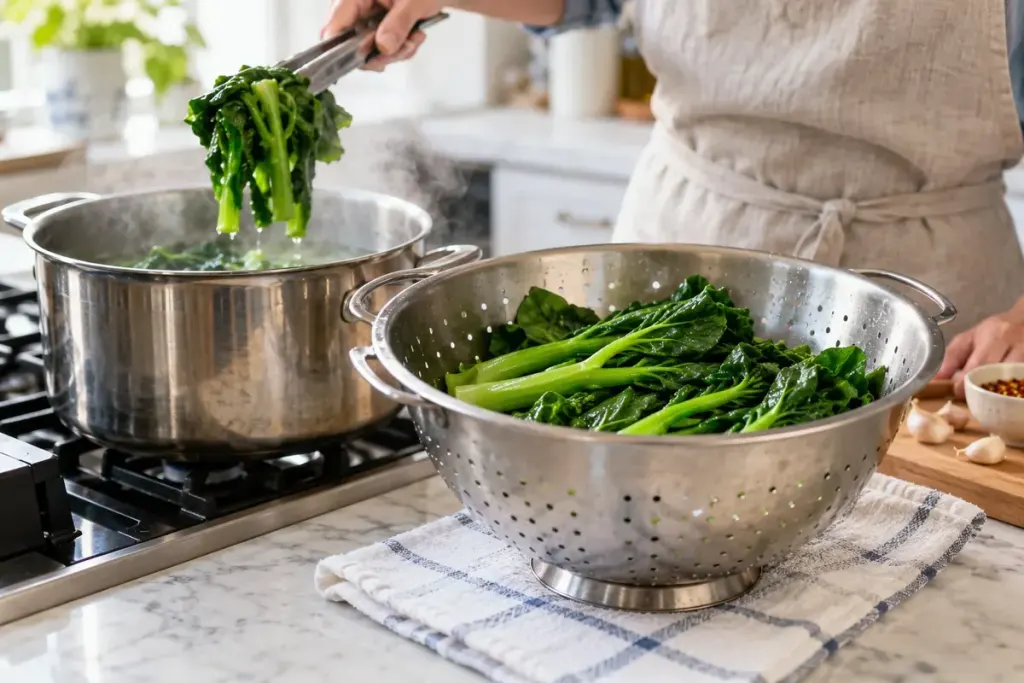
The water is boiling and the greens are ready, but the colander is still in a cupboard. That small delay can turn a brief blanch into several extra minutes of cooking. Set up the finish before starting the pot.
Good Food’s explanation of blanching describes a brief plunge into boiling water, followed by draining and refreshing in cold water to stop the cooking. The technique can prepare vegetables for another cooking stage rather than finish the entire dish.
Decide what happens next
Greens that will be served promptly with a dressing have a different journey from greens being prepared for a later stir-fry. Work backwards from that destination. Have a clean colander, lifting utensil and suitable serving or cooling container ready. If your recipe calls for refreshing, prepare the cold water first.
Cut pieces to a reasonably consistent size. Thick stalk sections and delicate leaves will not soften at the same pace, so follow the recipe’s order or separate them where appropriate. A large handful pushed into a small pan can also cool the water sharply and make timing less predictable.
Judge texture, then drain properly
Colour alone is not a complete doneness test. Lift a small piece safely, let it cool enough to taste, and check whether it has the texture needed for its next stage. A vegetable that still needs time in the wok should not already be collapsing in the blanching water.
After refreshing, drain again. Water trapped between leaves can dilute a dressing or make a hot wok steam when you intended to stir-fry. For an illustrative dinner plan, the sequence might be wash, trim, blanch, refresh, drain, then prepare the sauce before the final brief cooking. The point of the sequence is control, not an extra ritual.
Avoid leaving prepared greens sitting at room temperature while other tasks expand. Follow suitable food-storage guidance if they will not be used promptly. Blanching is not sterilisation and does not turn vegetables into a shelf-stable ingredient.
Once the method is familiar, note the vegetable, cut size and texture you preferred. Those details are more transferable than a single timing copied from a different bunch of greens.