
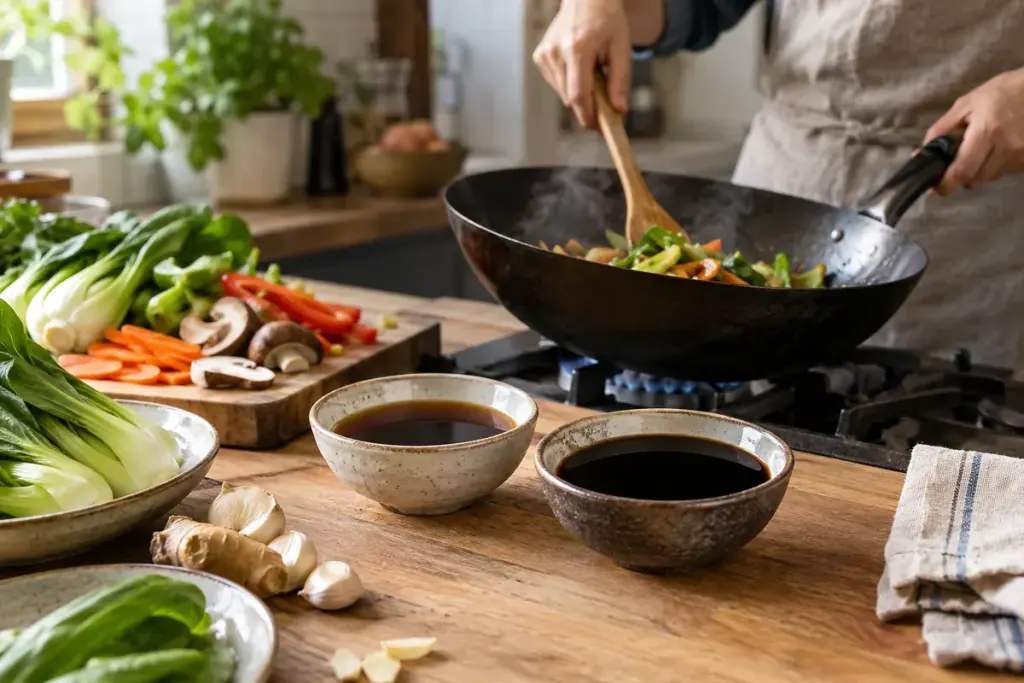
A recipe asks for light soy sauce and a small amount of dark soy sauce. Using only the darker bottle may give the dish plenty of colour without the balance the recipe intended. The names describe different styles, not simply a strong and weak version of the same seasoning.
Lee Kum Kee’s seasoning guide describes Chinese light soy sauce as a salty, savoury seasoning and dark soy sauce as darker, with a slightly sweet character. Individual products vary, so read the actual bottle as well as the recipe.
- Light soy sauce
- Often provides the main soy seasoning in a Chinese dish. “Light” in this context does not automatically mean reduced sodium.
- Dark soy sauce
- Often appears in a smaller quantity where deeper colour and its particular flavour are wanted.
- Reduced-sodium soy sauce
- A separate product description. Check the label instead of inferring it from the word light.
Start with a recipe that specifies both types and keep its quantities separate. Measure them before the cooking begins so a rushed pour does not turn a small addition into the dominant ingredient. You can see the difference particularly clearly in pale ingredients such as tofu or noodles.
Adjust the dish, not just its colour
If the food looks paler than expected, taste it at an appropriate safe stage before adding more sauce. Colour alone is not a reliable measure of saltiness. Other ingredients, including stock, preserved vegetables and bottled sauces, may already contribute substantial seasoning.
When a substitution is unavoidable, acknowledge that the result will change. Check the manufacturer’s suggestions and make a small trial rather than automatically replacing every spoonful. Keep a note of the bottle used; the generic words “soy sauce” may be too vague to reproduce a dish you enjoyed. Treat the two styles as separate tools, and choosing the right one becomes much easier.