
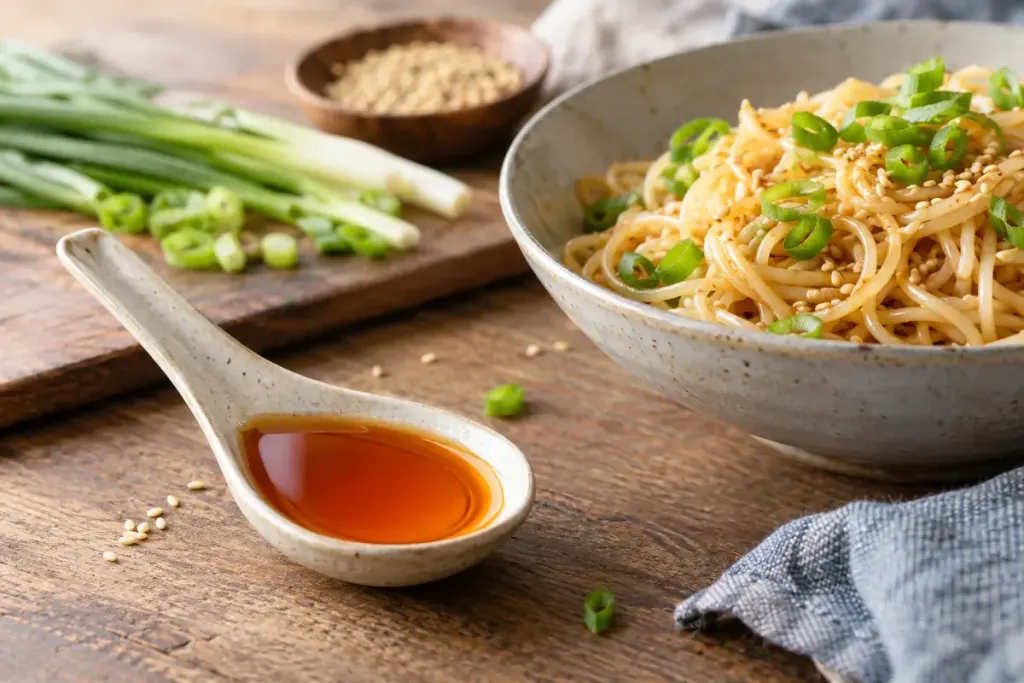
A bottle of toasted sesame oil is easy to use as a final flourish. It is also easy to pour enough that every other ingredient disappears behind it. Before reaching for the bottle, decide whether you want a background note or the main aroma of the dish.
Read the label first. Toasted sesame oil, untoasted sesame oil and blended products are not interchangeable descriptions. Follow the manufacturer’s cooking and storage directions rather than assuming that every bottle belongs in a very hot wok.
Try it in one spoonful
For noodles or a dressing, set aside a spoonful of the prepared sauce. Add a very small amount of oil, stir and taste it with a bite of the food it will season. Tasting the concentrated dressing alone can mislead you: noodles, vegetables or tofu change how strongly it reads.
If the sesame aroma is already dominant in the sample, scale back before seasoning the whole bowl. You can add another little amount later. Removing it once it has coated everything is much harder.
Separate aroma from salt and acidity
When a sauce tastes flat, oil may not be the missing element. Compare a small sample with a touch of the recipe’s vinegar, another with its salty seasoning and another with sesame oil. Change only one thing in each sample. This simple kitchen comparison helps you distinguish a weak aroma from a sauce that needs a different balance.
For a cooked dish, follow the recipe’s addition point. A finishing drizzle and an oil used during cooking are different choices; neither should be made solely because the bottle happens to be beside the stove.
Sesame is an allergen, so check with guests and read the labels of sauces and blends too. At the table, a separate clearly identified condiment can let people adjust their own serving when appropriate. Keep a brief note of the brand and amount that worked: the next bottle may taste more intense even when its name sounds identical.