
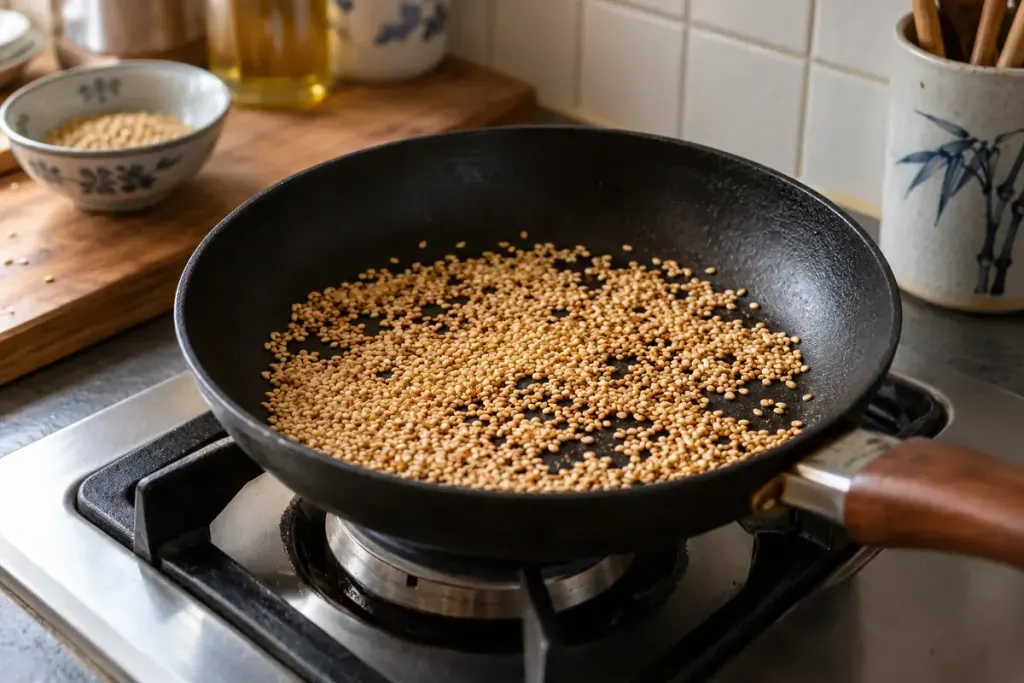
A spoonful of sesame seeds can add a gentle toasted note to noodles or vegetables. Burnt seeds bring something else entirely. Because the individual seeds are small, the useful change and the unpleasant one can happen close together.
Check the packet before you begin. Seeds may already be roasted, and white and black varieties do not give the same visual clues. There is no reason to repeat a toasting step merely because another recipe starts with raw seeds.
Keep the batch easy to watch
Use a clean, dry pan and a modest quantity spread across its base. Apply gentle heat and move the seeds frequently so one patch does not remain over the hottest part. Stay beside the pan rather than using this moment to chop the next ingredient.
With pale seeds, look for a light golden change and notice the aroma. Black seeds make colour a less useful guide, so pay particular attention to smell and the method specified by your recipe. Do not wait for smoke as a signal that they are ready.
Transfer the seeds promptly to a heatproof plate when the desired stage is reached. Leaving them in the hot pan continues the cooking. Let a small sample cool before tasting it; a hot seed is not a useful tasting test.
Choose the moment they join the dish
For a cucumber salad or a finished noodle bowl, a small scattering at serving time keeps the texture noticeable. Stirring them into a wet sauce earlier produces a different result. Decide whether you want distinct little seeds or a more integrated flavour.
Try a little on one serving before seasoning the entire dish. The right amount depends on the other ingredients, and more toasted flavour is not always an improvement. Sesame is an allergen, so make its presence clear when serving others and follow their dietary requirements.
If the batch smells burnt or tastes harsh, start again with less heat. Adding it to a larger dish rarely turns bitterness into a useful seasoning.