
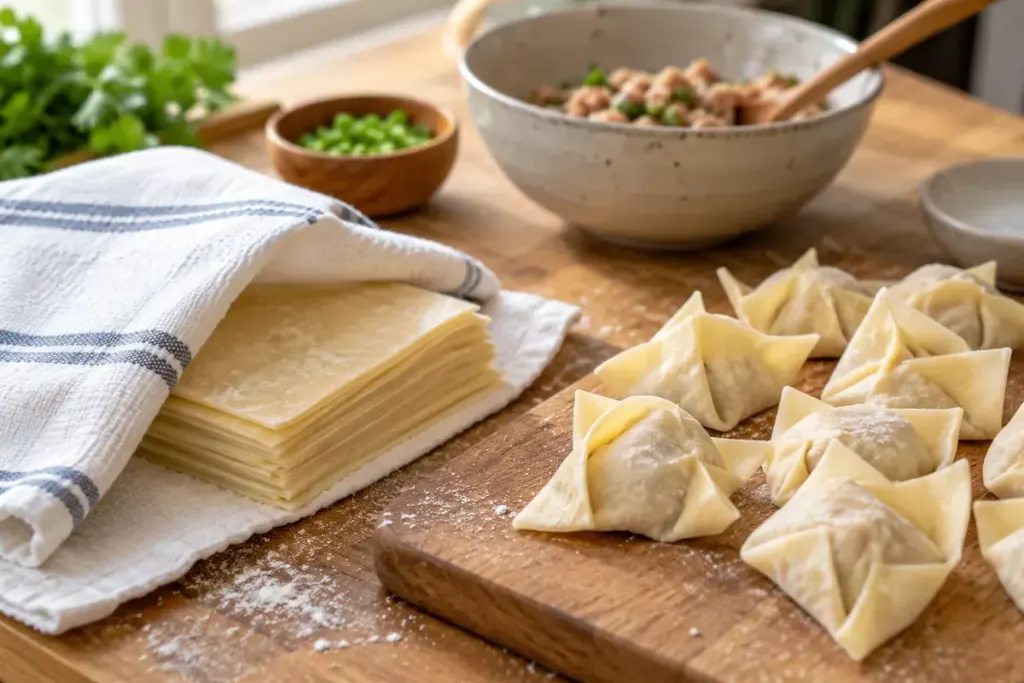
The first wonton folds neatly. Ten minutes later, the next wrapper cracks at the corner before the filling is enclosed. During a leisurely folding session, the exposed stack may be changing faster than your technique.
Set out a small working pile and keep the remaining wrappers covered according to their packet instructions. A clean cover should protect them without soaking them. Work with wrappers intended for your recipe; a thick dumpling skin and a thin square wonton wrapper are not automatically interchangeable.
Make the sealing edge easy to see
Place the wrapper flat and add a modest amount of filling near the centre. Leave a clear border. Filling smeared across that border can interfere with the seal, while an oversized mound forces the wrapper to stretch around it.
Test one wonton before filling a whole row. Fold it gently, press out obvious trapped air without squeezing filling into the edge, and use the recipe’s specified sealing method. If the wrapper needs water, apply only enough to make the edge adhere; a puddle can make a delicate skin difficult to handle.
Arrange the work in small batches
Keep the prepared wontons separated on a suitable tray so their damp surfaces do not stick together. Cover them as the recipe directs while you finish the batch. Do not leave a meat or seafood filling at room temperature throughout a long social cooking session; keep perishable ingredients chilled and bring out manageable portions.
For an original practice exercise, fill three wrappers with slightly different amounts. Compare how easily each closes without strain. Choose the smallest amount that gives the shape and proportion you want, rather than trying to maximise the filling in every piece.
A cracked wrapper needs a change of plan
Do not rely on harder pinching to repair a dry split. Check the packet condition, covering arrangement and pace of work. Set an unusable wrapper aside and begin with a fresh one. Follow a tested recipe for cooking time and safe doneness of the filling.
A calm folding station leaves the wrappers covered, the sealing edges clean and the next tray ready. Those small preparations make it easier to enjoy the repeated movement instead of fighting the last half of the stack.