
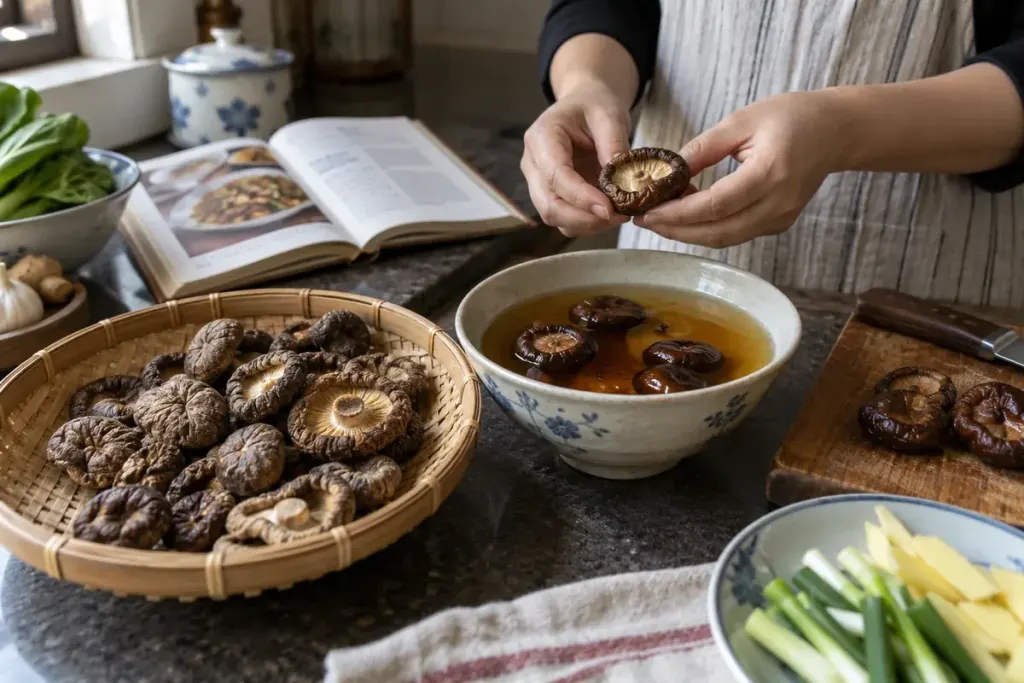
A small bag of dried shiitake can contribute more than mushroom pieces. Rehydration also produces a fragrant liquid that may suit a soup or braise. Treating the two parts separately gives you more control over texture and flavour.
Start with a product sold for food use, check its condition and follow its storage and preparation instructions. Drying changes the ingredient; it does not remove the need for sensible handling once water is added.
Let the centre catch up with the surface
A cap can look soft outside while remaining firm through the middle. Thickness matters, so avoid using one fixed soaking time for every packet. Plan ahead rather than discovering a hard centre after the mushroom has joined a delicate filling.
Shiitake producer Sugimoto’s preparation guide describes cold-water rehydration in the refrigerator and straining the soaking liquid. Follow the product’s directions; do not leave a long soak sitting in a warm kitchen. Use clean containers and handle the rehydrated mushrooms as a perishable ingredient.
Decide what the dish needs from the caps
After soaking, check the texture and remove tough stem portions as appropriate. A braise can accommodate larger pieces, while a dumpling filling may need a finer, consistent cut. Squeeze or drain according to the recipe so unexpected liquid does not change the filling’s consistency.
Imagine preparing a mushroom-and-vegetable filling: uneven chunks can make each bite different and complicate wrapping. Cutting the softened caps to a similar size solves a different problem from simply adding more seasoning.
Use the liquid deliberately
Strain out sediment before considering the soaking liquid for a cooked dish. Add it as part of the recipe’s liquid allowance, not automatically on top of the full amount of stock. Keep enough flexibility to adjust the final consistency.
For a clear, delicate soup, a little may be sufficient. In a darker braise, its earthy character may fit more naturally. The decision should follow the dish, not the desire to use every drop. Cook the mushrooms and any retained liquid as directed by the recipe and product guidance.
Label any prepared ingredient you refrigerate and use it promptly within appropriate food-safety guidance. A useful kitchen habit is to write “caps” and “liquid” as separate recipe components. You are then choosing how each contributes instead of treating the soaking bowl as one indivisible ingredient.