
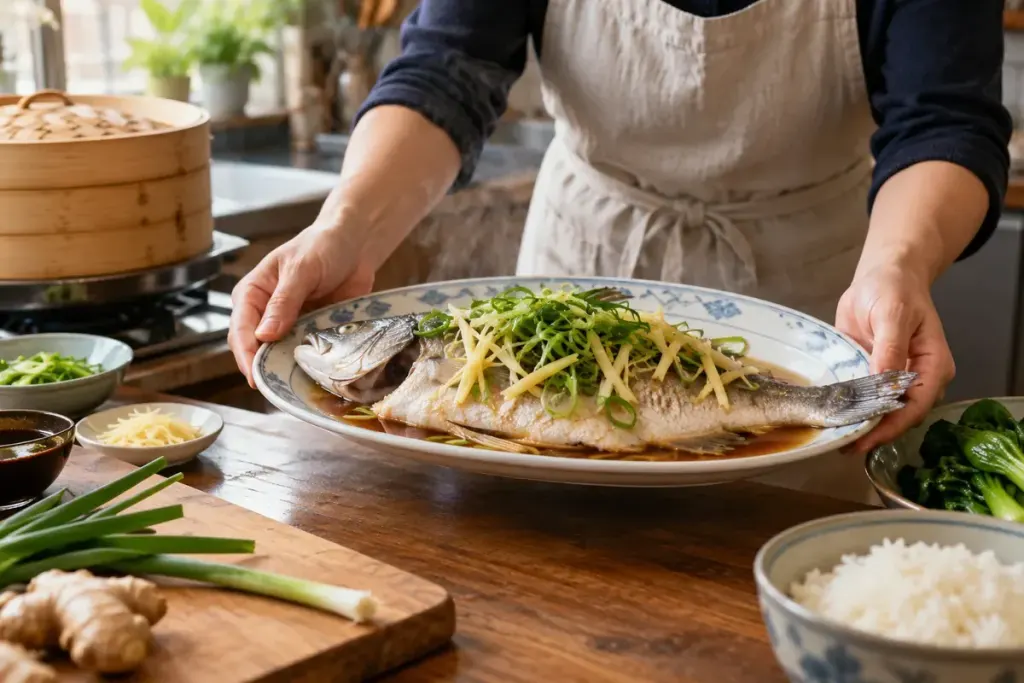
The fish is ready, but the rice has not started and the spring onions are still in the shopping bag. A simple steamed-fish dinner becomes easier when you organise the other jobs around the moment the fish leaves the steamer.
Choose a tested recipe appropriate to the species, size and cut you have. A whole fish and a thick fillet do not share a universal cooking time. The “last ten minutes” here describes the busy serving window, not a promise that any fish cooks in ten minutes.
Before the fish goes in
- Check that the heatproof plate fits the steamer and can be removed safely.
- Prepare ginger, scallions and the recipe’s sauce with clean utensils.
- Start the rice early enough for its own cooking and resting method.
- Choose a vegetable dish that does not compete for the same burner at the critical moment.
Keep raw fish chilled until needed and separate it from ready-to-eat garnishes. Wash hands, utensils and surfaces after handling it. The FDA’s seafood guidance recommends cooking most seafood to an internal temperature of 145°F, about 63°C. Use an appropriate food thermometer and the guidance applicable to your fish rather than relying on a timer alone.
Give the final jobs an order
Set the table and clear a heat-safe landing place before opening the steamer. Have serving utensils ready, including a way to handle bones if you are serving a whole fish. Lift the lid away from your face and protect your hands from steam; a wet cloth is not a suitable substitute for proper heat protection.
Follow the recipe’s instructions for cooking liquid and finishing sauce. Taste the sauce separately before adding it all: the fish and accompaniments should remain recognisable rather than becoming a vehicle for salt.
Serve promptly once safely cooked. If another dish falls behind, simplify that dish rather than repeatedly reheating the fish while everyone waits. After dinner, record which job caused the delay. Adjusting the order of preparation often improves the next meal more than adding another ingredient.