
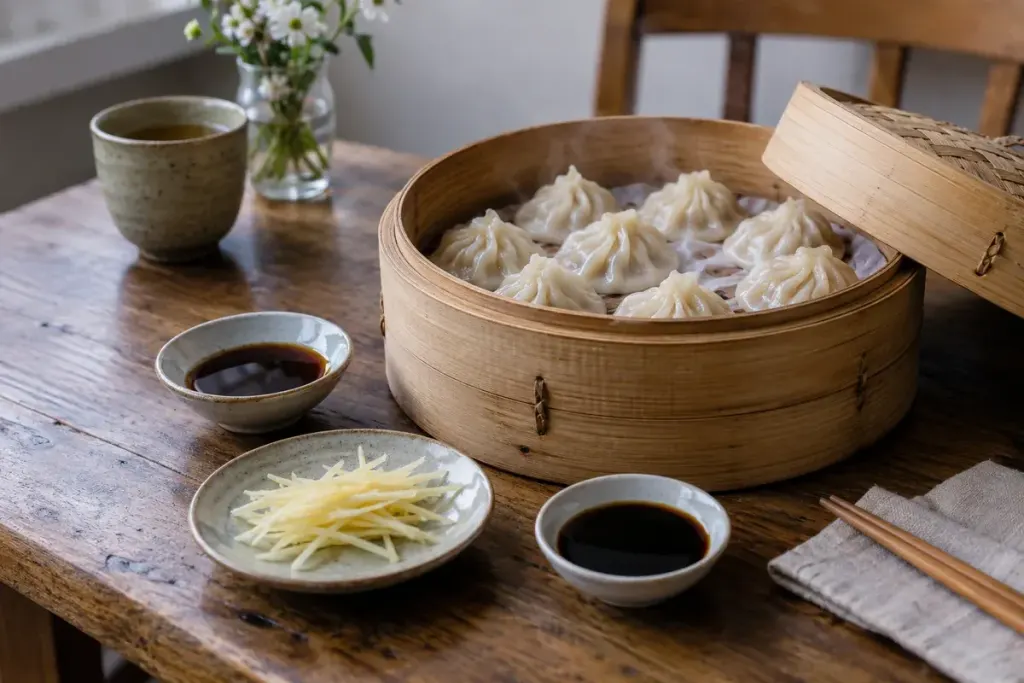
A dumpling dip can taste flat even when it already contains plenty of soy sauce. More salt may simply make it heavier. A small amount of black vinegar introduces acidity and a different aroma, changing the balance before you reach for another salty ingredient.
Chinese black vinegars are not all identical. The Woks of Life’s ingredient guide distinguishes black vinegar from the other rice vinegars used in Chinese cooking. Read the bottle’s ingredients, especially if wheat or other allergens matter to someone at the table. A dark colour alone does not identify a particular style.
Build a tasting spoon, not a large bowl
Start with a small spoonful of the dip you already like. Add a few drops of vinegar, stir, then taste it with a piece of the food. The dumpling’s filling, wrapper and seasoning all affect the result. Tasting the sauce alone can encourage adjustments that overwhelm the actual meal.
If the acidity is useful but too sharp, test a little water in another small portion. If the flavour needs warmth rather than more sourness, a few fine ginger strips offer a different direction. These are tasting experiments, not a claim that one ratio represents every Chinese region or household.
Keep the changes readable
Changing vinegar, chilli oil, sugar and soy sauce at once makes it difficult to learn which addition helped. Write down a rough spoon measure once you find a combination you enjoy, including the vinegar brand or type. A replacement bottle may need a fresh adjustment.
Serve a plain option separately when guests have different preferences, and use a clean tasting spoon each time. The goal is a dip that makes the dumpling more enjoyable, not one that makes every filling taste the same.