
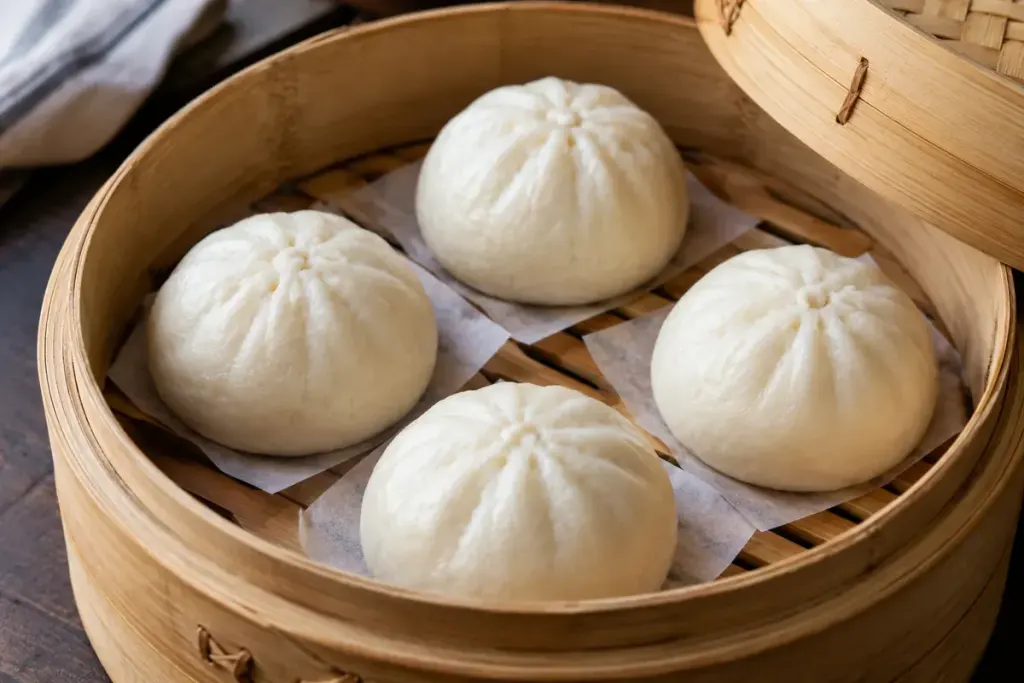
Six buns fit neatly in a steamer before proofing. After they rise, their sides meet; after cooking, lifting one pulls the soft surface away from its neighbour. The problem began with the arrangement, before any steam reached the dough.
Yeasted buns need room for the growth specified by their recipe. The Woks of Life’s steamed vegetable bun method is a useful recipe-level reference for shaping, proofing and steaming. Use its instructions as a complete method rather than borrowing one timing for an unrelated dough or filling.
Plan the space around the bun
Place each shaped bun on its own suitable liner, allowing clearance from neighbouring buns and the steamer wall. Keep the arrangement open enough for steam to circulate. A large unperforated sheet covering every opening changes the steamer’s airflow; individual parchment squares are easier to position deliberately.
Do a layout check with the first few pieces. If the basket is already crowded, divide the batch before proofing is complete. Repeatedly lifting a fully risen bun to squeeze it elsewhere can damage the shape you just developed.
Coordinate the second batch
When only one basket is available, note which buns will cook first and follow the recipe’s holding advice for the remainder. Dough continues changing while it waits. A queue of ready buns should not be treated as if proofing stopped when the first batch entered the pan.
Set up enough water for the intended steaming period according to the equipment instructions, without allowing it to contact the buns. Keep handles and the lifting route clear. Open the lid away from your face and hands because escaping steam can burn.
At serving time, judge the result by more than height. Are the sides intact? Can each bun lift away without tearing another? A slightly smaller first batch that releases cleanly gives you a better guide to the next arrangement than filling every visible gap.