
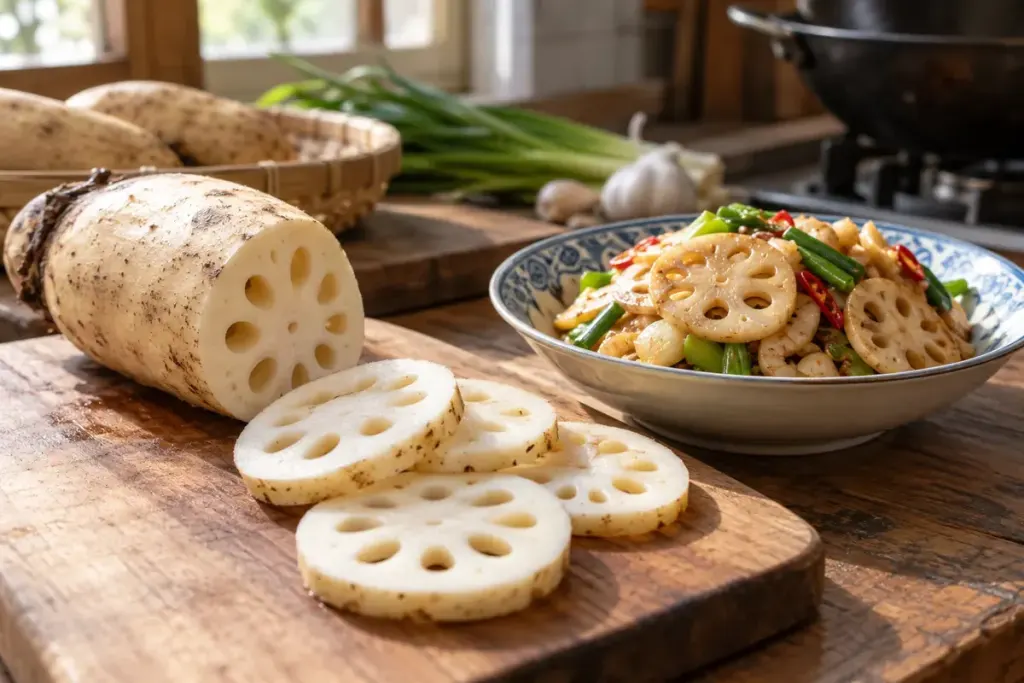
Cut across a lotus root and the vegetable reveals a pattern of open channels. Those pale, perforated slices make a stir-fry look distinctive before any garnish is added. They also reward careful preparation: uneven pieces can reach the pan with very different cooking needs.
For a tested starting point, The Woks of Life’s lotus-root stir-fry provides a complete recipe. Follow its quantities and cooking sequence if you want to reproduce that dish. The preparation notes here help you organise the ingredient rather than replace the recipe.
Check what form you bought
Fresh whole sections, peeled vacuum-packed pieces and prepared slices may need different handling. Read packaging for storage, preparation and use-by instructions. Do not assume a sealed pack is ready to eat or that it behaves exactly like a fresh root.
Wash and prepare the root as directed, inspecting the channels as you work. Use a stable board and a sharp knife. If a piece rocks on the board, create a stable position before attempting thin slices; attractive shapes are not worth an awkward cutting angle.
Give the slices a fair chance to cook together
Aim for a reasonably consistent thickness. Keep unusually thick end pieces separate rather than hiding them among thinner rounds. Prepare the sauce and accompanying vegetables before heating the wok so you can follow the recipe without leaving one ingredient waiting in a hot pan.
Observe the intended texture. A quick stir-fry and a long soup are different dishes, and a result that works in one should not become a universal test of doneness for the other. Taste only when the food has been prepared and cooked appropriately.
For the first attempt, keep the supporting ingredients simple. Notice the lotus root’s texture, how much sauce remains on the slices and whether your pan was crowded. Those observations will help you adjust a later batch more effectively than adding extra seasoning to compensate for uneven preparation.