
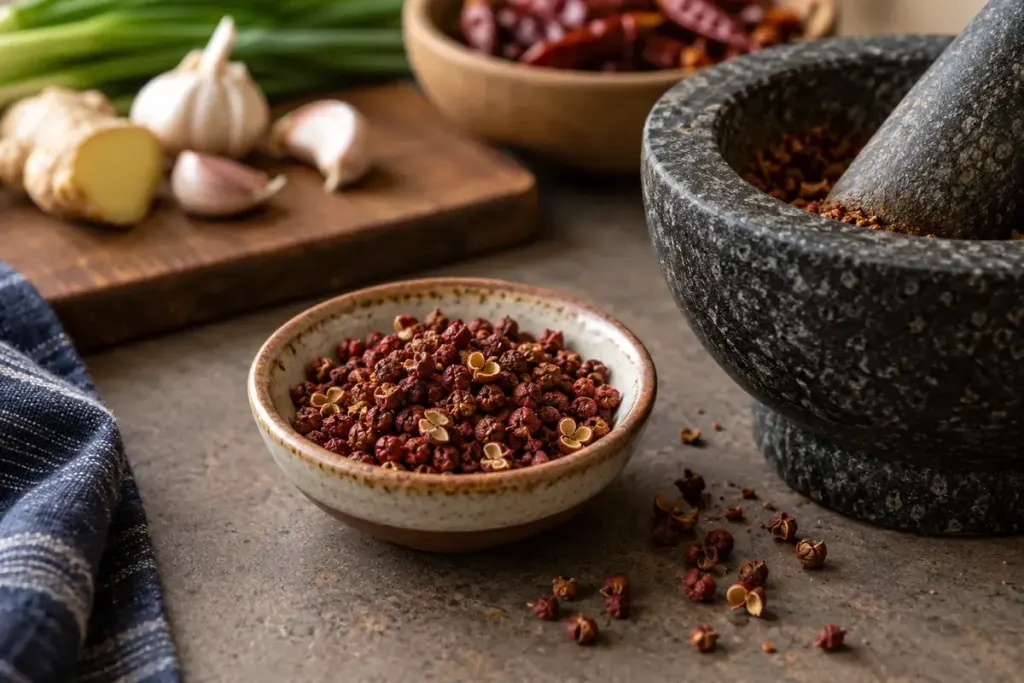
A recipe calls for Sichuan peppercorn, and the jar beside the cooker contains ordinary black pepper. The shared word pepper does not make them interchangeable. Sichuan peppercorn contributes a distinctive aroma and tingling sensation that plays a different role in the dish.
The Woks of Life’s ingredient guide describes the spice and its culinary uses. The husks are the useful aromatic part; hard dark seeds and stray stems can create an unpleasant texture. Check the product rather than assuming every packet has been cleaned equally well.
Read how the recipe uses it
Whole peppercorns infused in oil, freshly ground peppercorn and a prepared peppercorn oil are different forms. A recipe may strain out whole spices or deliberately leave them in the finished dish. Follow that method instead of adding a spoonful of whole husks where a fine powder was intended.
Start with the specified amount in a trusted recipe. The intensity can vary with the product and its condition, so taste a finished small portion before increasing it. Adding more chilli changes heat; it does not reproduce the same sensation as adding Sichuan peppercorn.
Prepare only what you need
Inspect the spice on a light-coloured plate so unwanted pieces are easier to see. If the recipe calls for grinding, use suitable clean equipment and check the texture before adding it. Avoid turning the preparation into an improvised high-heat toast unless that step belongs to the recipe.
Keep the remaining spice sealed and labelled, away from damp and strong heat. Write down the brand or batch if you are comparing results between cooks. The point is not to chase the strongest possible tingle, but to understand how the ingredient supports the balance of the dish you are making.