
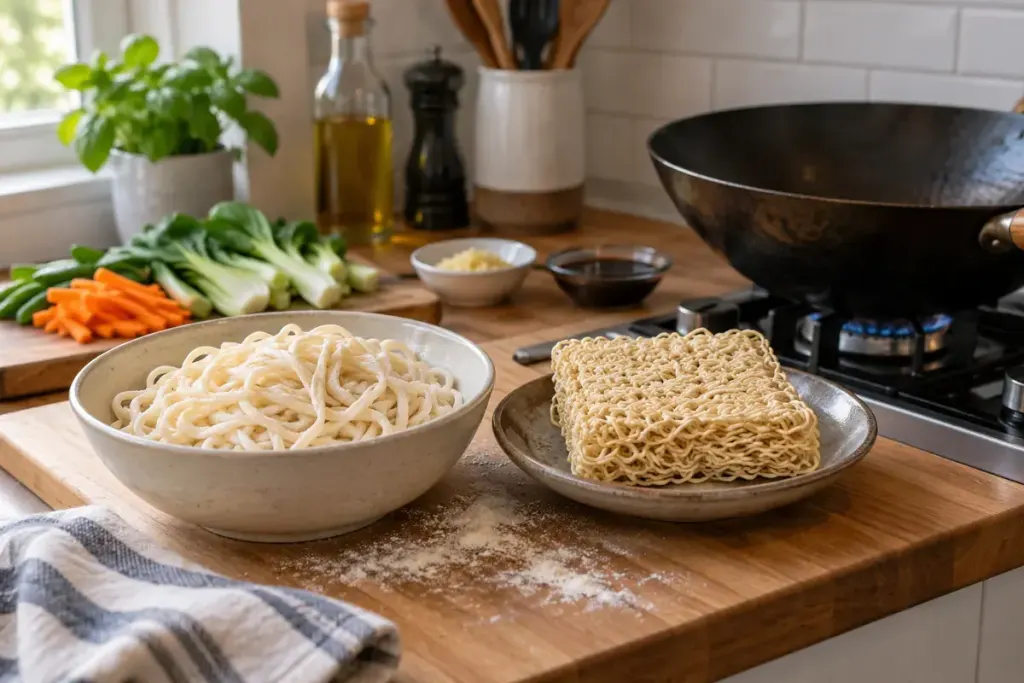
Two packets can both say wheat noodles and still need different treatment before they reach the wok. One may contain soft, fresh strands; another may be dry and brittle. Treating them as interchangeable can leave the vegetables waiting while the noodles turn into a clump.
Read the preparation instructions before starting the rest of the meal. Check whether the product needs boiling, soaking, loosening or direct heating. Fresh does not necessarily mean ready to eat, and a package that looks vacuum sealed does not tell you its cooking method.
Work backwards from the finish
Ask what will happen after the initial preparation. Will the noodles spend time in a hot sauce, or will they be tossed briefly with cooked ingredients? Follow a recipe designed for that noodle type instead of applying a universal boiling time.
Set out a colander, utensils and a clear landing place before draining. Separate the strands gently as directed. If the recipe calls for rinsing or oiling, use that instruction deliberately; neither step is automatically right for every noodle or sauce.
Do one small test before a large meal
With an unfamiliar packet, cook a small portion and finish it in the intended sauce. Notice whether it breaks, sticks or keeps its bite. That tells you more than judging the noodles straight from the water, because the finished dish includes another stage of heat and moisture.
Keep the prepared noodles close to the cooking station while following the product’s storage and food-safety directions. Do not leave cooked noodles sitting around for hours to make the stir-fry more convenient.
For a repeatable result, note the product name, preparation method and finishing time. Next time you change brands, check again. A good noodle dish starts with understanding the strands in your own kitchen, not assuming every packet wants the same treatment.