
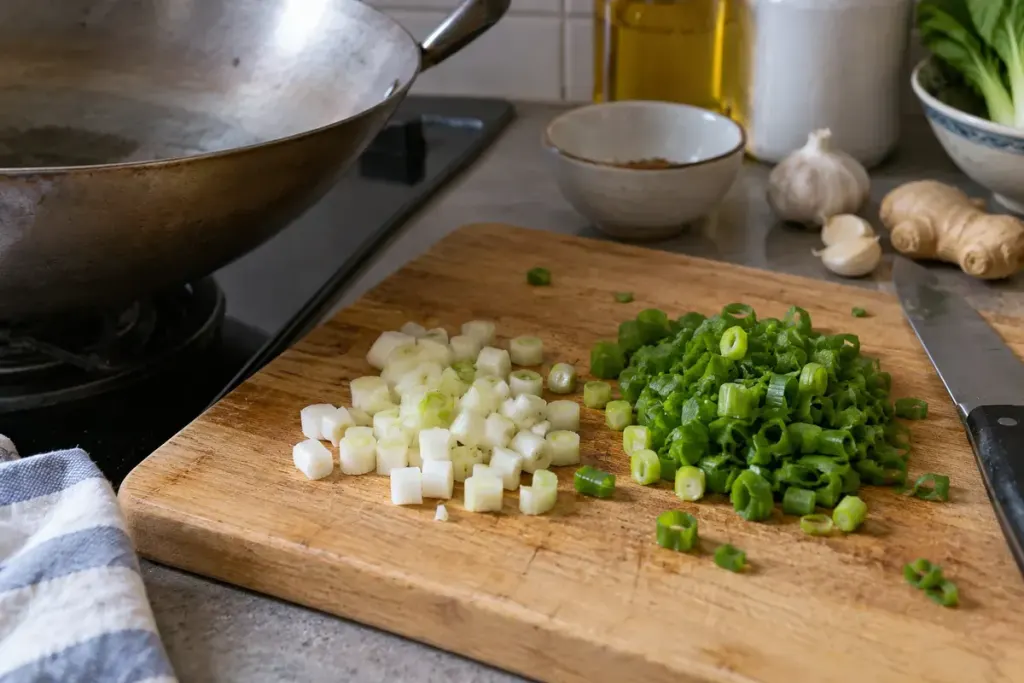
A handful of chopped scallions can perform two quite different jobs. The pale section can join the aromatic base of a dish, while the tender green tops can bring a fresher finish. Putting every piece into a very hot wok at once may erase that distinction.
Begin with the recipe’s intention. Some dishes deliberately cook the whole scallion; others reserve part for the end. Separating the pieces gives you options rather than imposing a universal rule.
Prepare two small piles
Wash the scallions thoroughly, remove damaged parts and trim as appropriate. Cut the pale and green sections into the shapes the dish needs. Thick lengths behave differently from thin rings, so keep pieces within each pile reasonably consistent.
For a simple illustrative stir-fry, the pale pieces might enter with other aromatics while the greens are held until the food is nearly ready. Follow the recipe’s heat and order: garlic, ginger, scallions and dried ingredients do not all tolerate the same treatment.
Have the next ingredient ready before adding delicate aromatics to a hot pan. If you stop to find a sauce bottle, a brief fragrant stage can become a bitter burnt one.
Decide what the greens should contribute
- For a softened finish, toss them through near the end and give them a short time in the heat.
- For a fresh garnish, use a small amount of clean, finely cut greens where the recipe calls for it.
- For longer-cooked scallion dishes, follow the specific method instead of treating every green piece as garnish.
Taste the finished dish before adding more. A thick raw piece can dominate a mild sauce, while a few fine rings may be enough. The right amount depends on the dish, the cut and your preference.
On the next attempt, change the timing of only one pile. That small comparison helps you recognise what cooked sweetness and fresh allium flavour each contribute, without needing a larger spice collection or a more complicated recipe.