
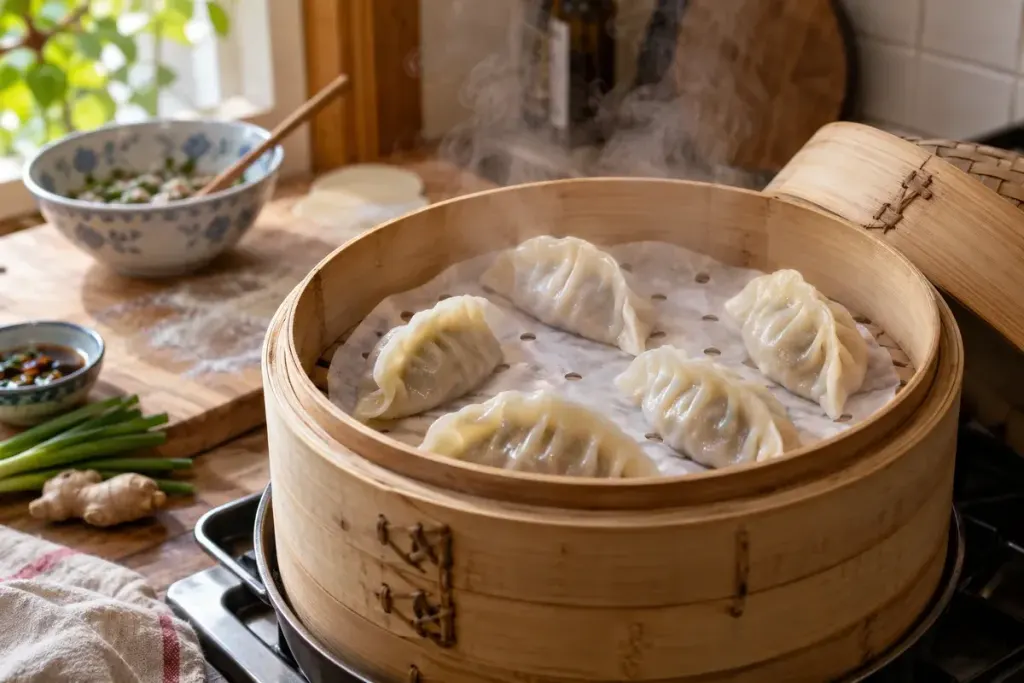
The dumplings look beautiful until you lift one and leave its bottom in the basket. Another splits where it stuck to its neighbour. These small frustrations often begin before the water boils.
A steamer needs to deliver steam around the food while supporting it gently. Think about the wrapper, the liner and the space between pieces as one setup. A crowded basket is not automatically a faster dinner if half the batch tears on serving.
Build the basket before heating it
Check that the steamer sits securely over an appropriate pan and that its materials are intended for the heat source. Prepare a food-safe liner suited to steaming. Perforated parchment or an appropriate leaf liner can help prevent sticking while leaving routes for steam.
The family cooks at The Woks of Life explain bamboo-steamer setup, including lining food placed directly on the basket and managing the water below. Their instructions are a useful reference when your equipment is unfamiliar.
Lay out one uncooked batch before committing all the filling. Leave room between dumplings and keep steam openings available. If the wrappers are especially delicate, a small first batch tells you more than filling every tier immediately.
Manage water without washing the food
The water must generate steam without bubbling up into the dumplings. Monitor the pan so it does not boil dry, following the steamer’s instructions when replenishing it. Use appropriate protection and lift the lid away from your face: escaping steam can burn.
Follow a tested recipe or the package directions for the particular dumplings. Fresh and frozen versions, different sizes and different fillings do not share one universal cooking time. A translucent wrapper is not a reliable safety test for meat inside; use the relevant food-temperature guidance and a thermometer where appropriate.
Let the first batch teach you something
Check three things when serving: whether the bottom releases, whether adjacent wrappers stayed separate and whether the filling cooked correctly. Note the liner, batch size and steaming conditions. If the bottom sticks but the rest is sound, change the contact surface before changing the entire dough recipe.
Move cooked dumplings gently with suitable utensils and serve promptly. A broad plate gives them breathing room instead of compressing the skins into a heap. The reward for a little spacing is a dumpling that reaches the table with the shape and filling you worked to create.