
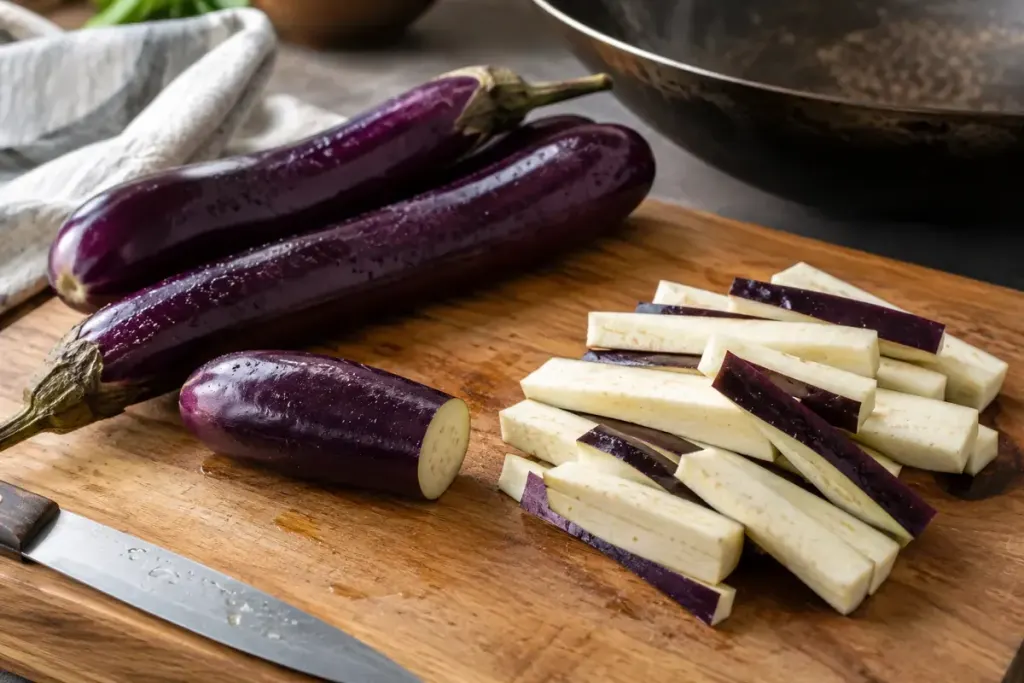
Long Chinese eggplants invite quick cutting: slice, tip everything into the wok and hope the sauce sorts it out. A more useful decision comes before the heat. Choose the shape for the way you intend to cook the vegetable, then make the pieces similar enough to finish together.
For a quick stir-fry, manageable batons give you surfaces that can contact the pan without leaving a very thick centre. For a longer braise, larger pieces may better suit the softer result you want. Steaming allows another approach: cook larger sections until tender, then arrange or separate them for dressing.
These are starting points, not fixed measurements. Eggplants vary in diameter and firmness. A narrow end cut into the same length as a thick middle section will still cook differently. Split the thick section again if the recipe needs evenly tender pieces.
- Wash the eggplant and trim the stem end.
- Set aside damaged portions rather than hiding them in the sauce.
- Lay one finished piece beside the next section as a visual size guide.
- Prepare the sauce and aromatics before starting a fast cooking method.
A crowded wok adds another variable. Pieces can release moisture faster than the pan can evaporate it, so browning and softening may happen differently from the recipe’s photograph. Cook in batches when needed, and return the pieces together for the final sauce stage.
Test texture before adding the finishing touches
Use a utensil to check one of the thicker pieces. The middle should suit the intended dish, rather than remaining firm while the outside collapses. If more cooking is needed, follow the recipe’s moisture and heat instructions instead of repeatedly pouring in oil.
Keep a note of the cut you used alongside the cooking method. That small detail makes a successful eggplant dish much easier to repeat than a note saying only “cook until ready.”