
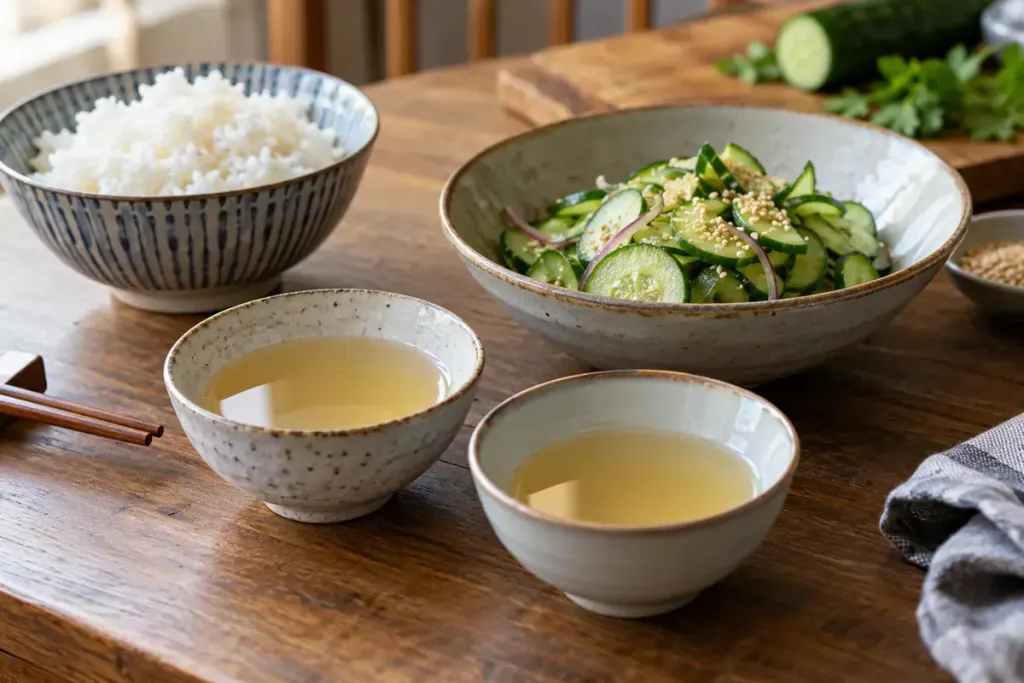
Two bottles labelled rice vinegar can behave differently in the same bowl. One may supply mainly acidity; another may already contain sugar and salt. Substituting equal spoonfuls can therefore change sweetness and seasoning as well as the sharpness of a sauce.
For a concrete example, Marukan’s seasoned rice vinegar ingredient list includes sugar and salt. That is an example of one product, not a formula shared by every seasoned vinegar. Read the actual bottle in your kitchen.
Start with the ingredient list
Look beyond the large words on the front. Check whether the recipe requests plain rice vinegar, seasoned rice vinegar or a particular dark vinegar. Chinese black vinegar has its own flavour and should not be treated as the same ingredient merely because both products are acidic.
For a small dressing, mix a test portion before coating the whole dish. If using a sweetened, salted vinegar in place of plain vinegar, hold back some of the recipe’s separate sugar and salt, then taste. This is a practical adjustment for a flexible sauce, not a reliable substitution rule for every recipe.
Taste with the food it will dress
A spoonful of sauce tasted alone can seem harsher than the same sauce on cucumber, noodles or tofu. Test a little with the intended ingredient, using a clean spoon each time. Notice whether you need more acidity, sweetness, saltiness or simply less sauce.
Write down the product and amounts when a combination works. “Two spoons of rice vinegar” is an incomplete note if next month’s bottle has a different formulation.
Keep this improvisation away from preservation recipes. Pickling for shelf storage depends on a tested process and specified acidity; an agreeable taste does not establish safety. For an everyday freshly served dish, careful label reading and a small tasting bowl offer a much more dependable starting point than judging bottles by colour alone.